Minneapolis Restaurant Inspection Results: Decode Score, Priority, and Data Fields
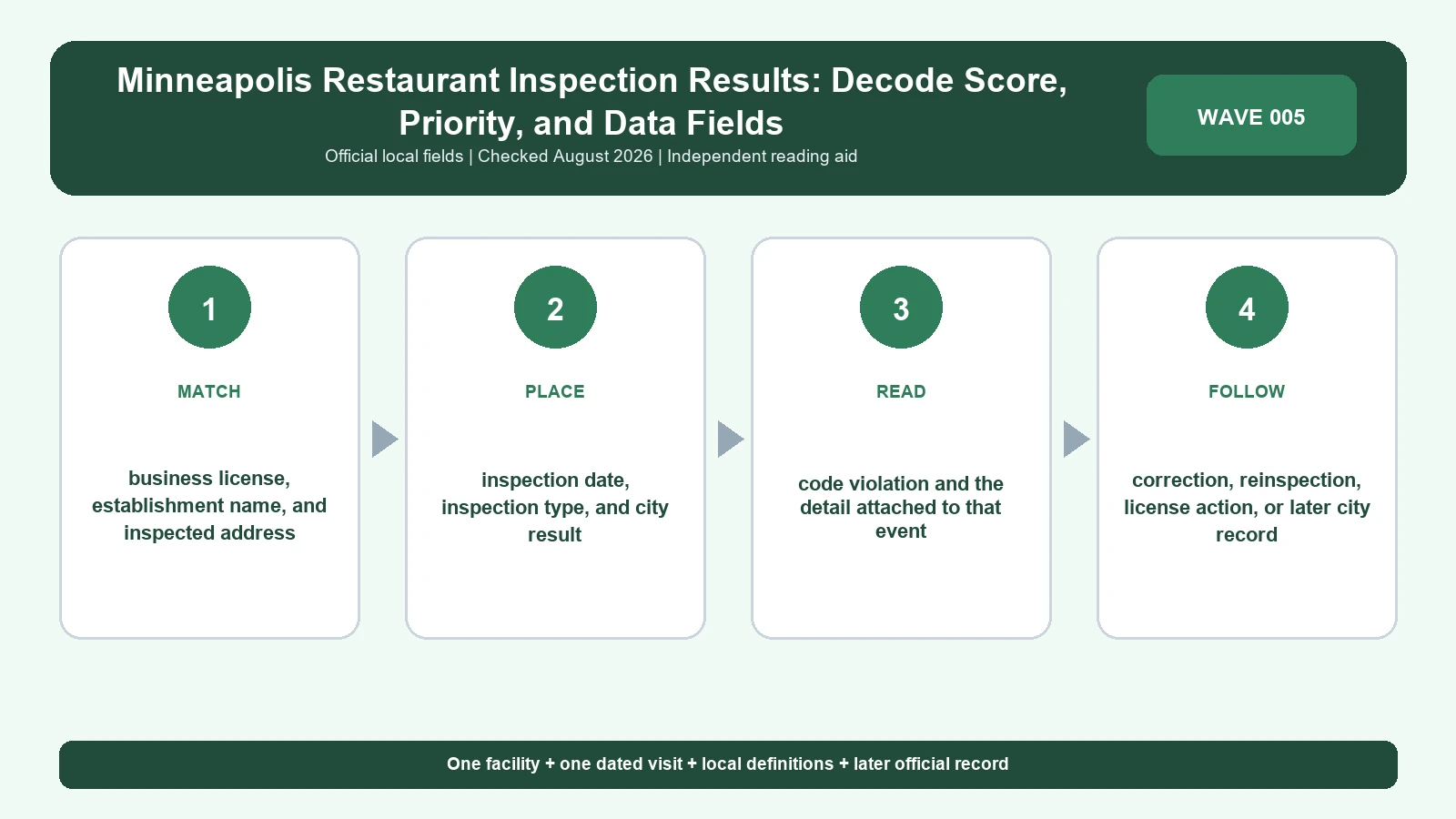
Recalculate a Minneapolis score from Priority 1 and Priority 2 deductions, then verify facility, inspection, code, and comment fields.
Choose the guide for the restaurant’s city, county or state to find the responsible inspection agency and its official search. Match the restaurant’s name and address before reading its dated report.
Find a report in Delaware: follow the official lookup route and check which report matches the establishment.
Count inspections, not spreadsheet rows: compare the different row structures and the worked Delaware example.
Read NYC inspection dates and community views: trace a shared data view to its source before comparing visits.
Browse more local guides below. These articles help you find and interpret official records; they are not live inspection results or a safety rating.
Recalculate a Minneapolis score from Priority 1 and Priority 2 deductions, then verify facility, inspection, code, and comment fields.
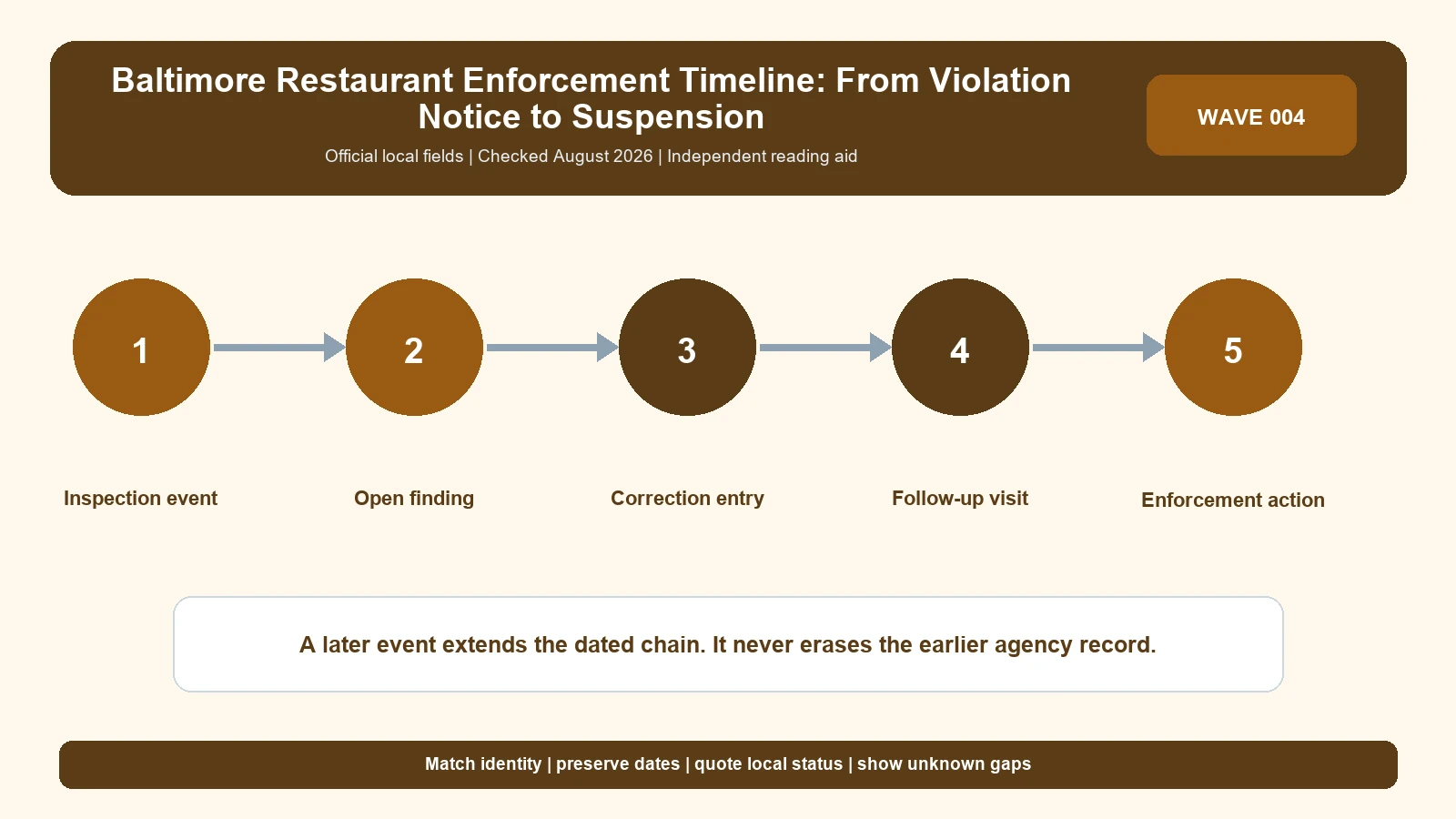
Build a Baltimore enforcement chain from the facility notice through follow-up, suspension, discontinued operations, and documented restoration.
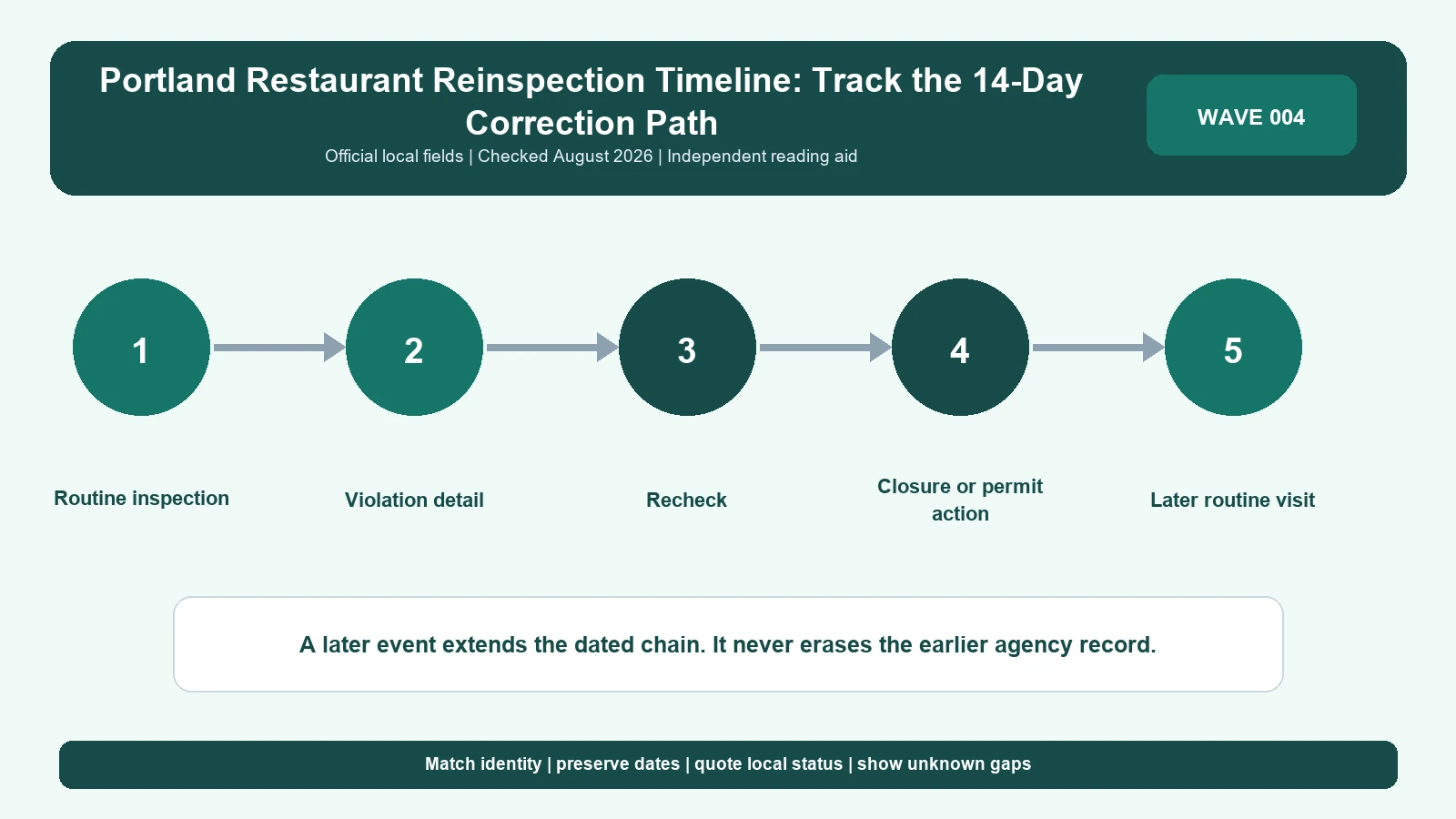
Follow a Portland serious violation from the scored routine visit through the county’s 14-day correction path and unscored return inspection.
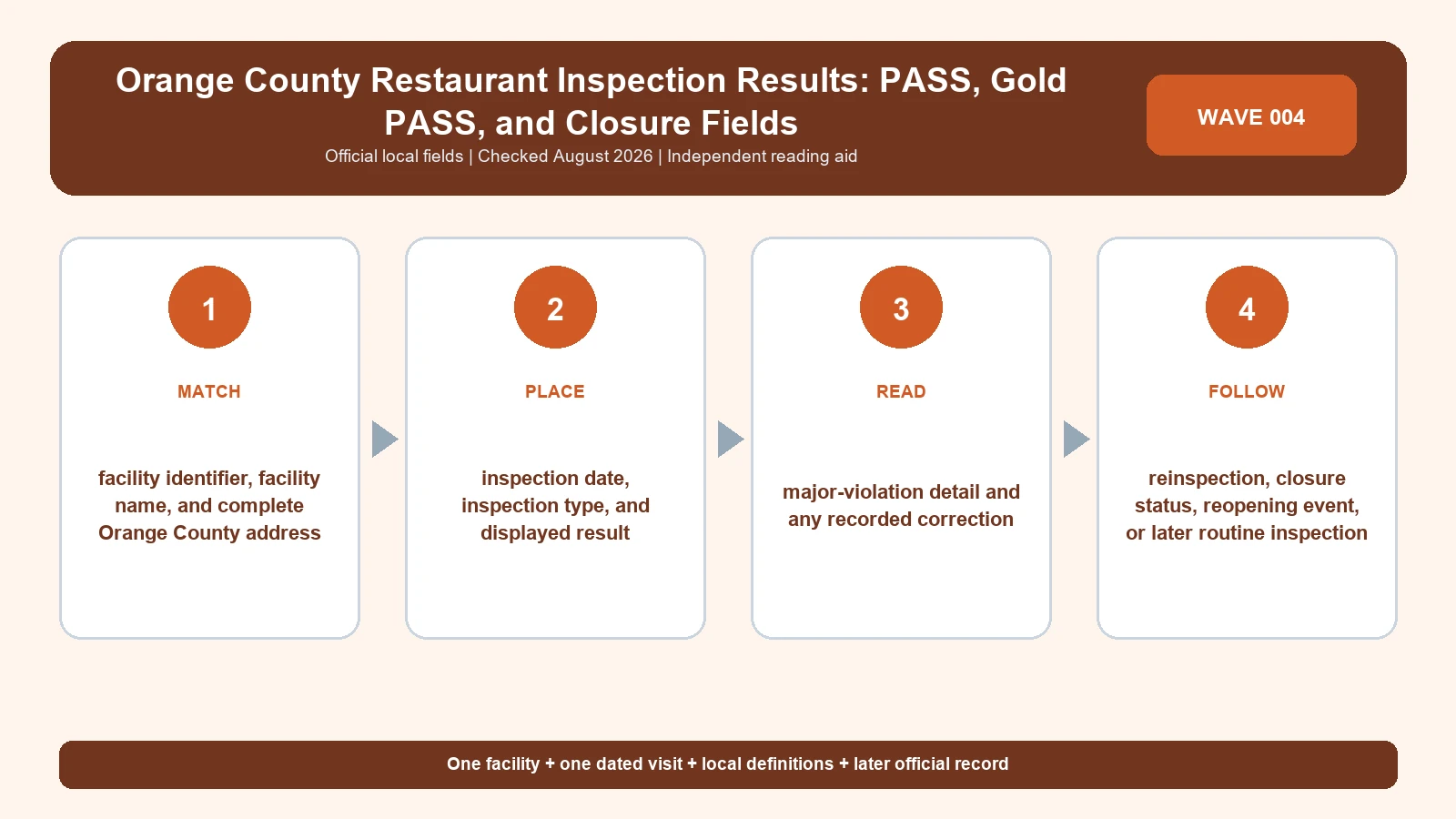
Separate Orange County’s traditional PASS seal, Gold PASS award criteria, inspection findings, closure fields, and dated reopening evidence.
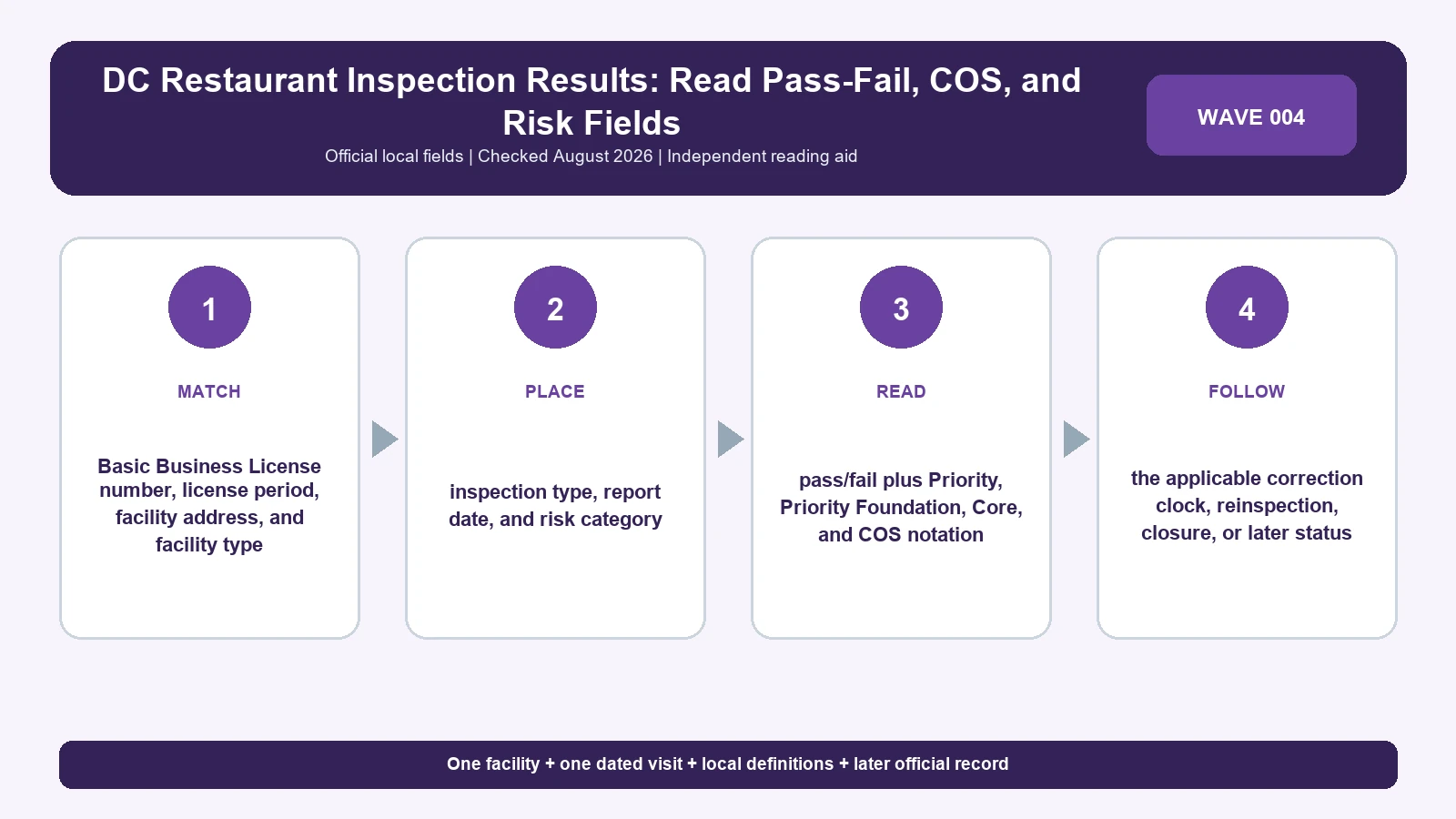
Read a DC pass-fail report by BBL, license period, risk category, violation class, and COS status without converting it into a letter grade.
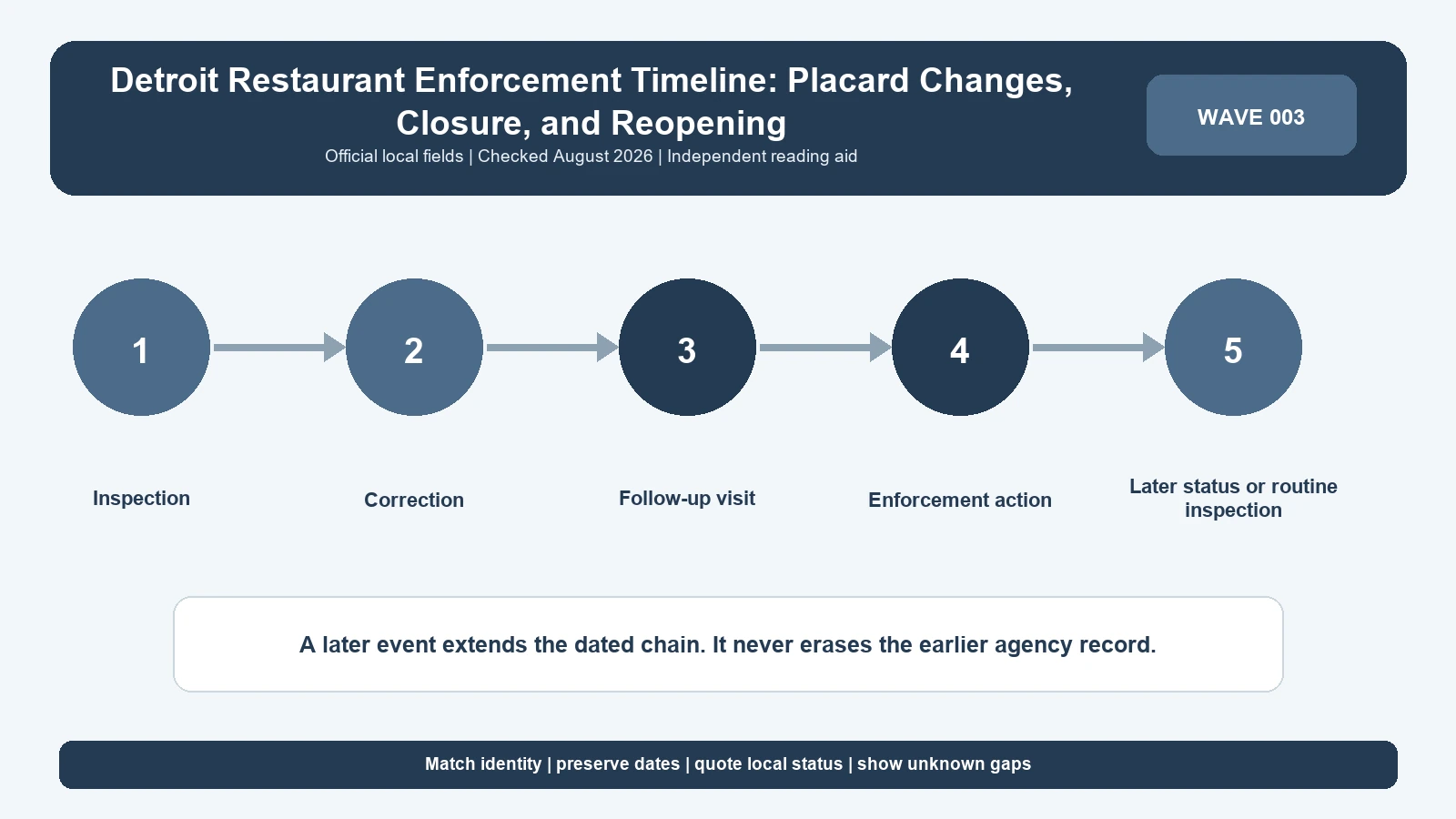
Follow Detroit placard changes from inspection or license action through correction, city reinspection, reopening, and the next dated color.
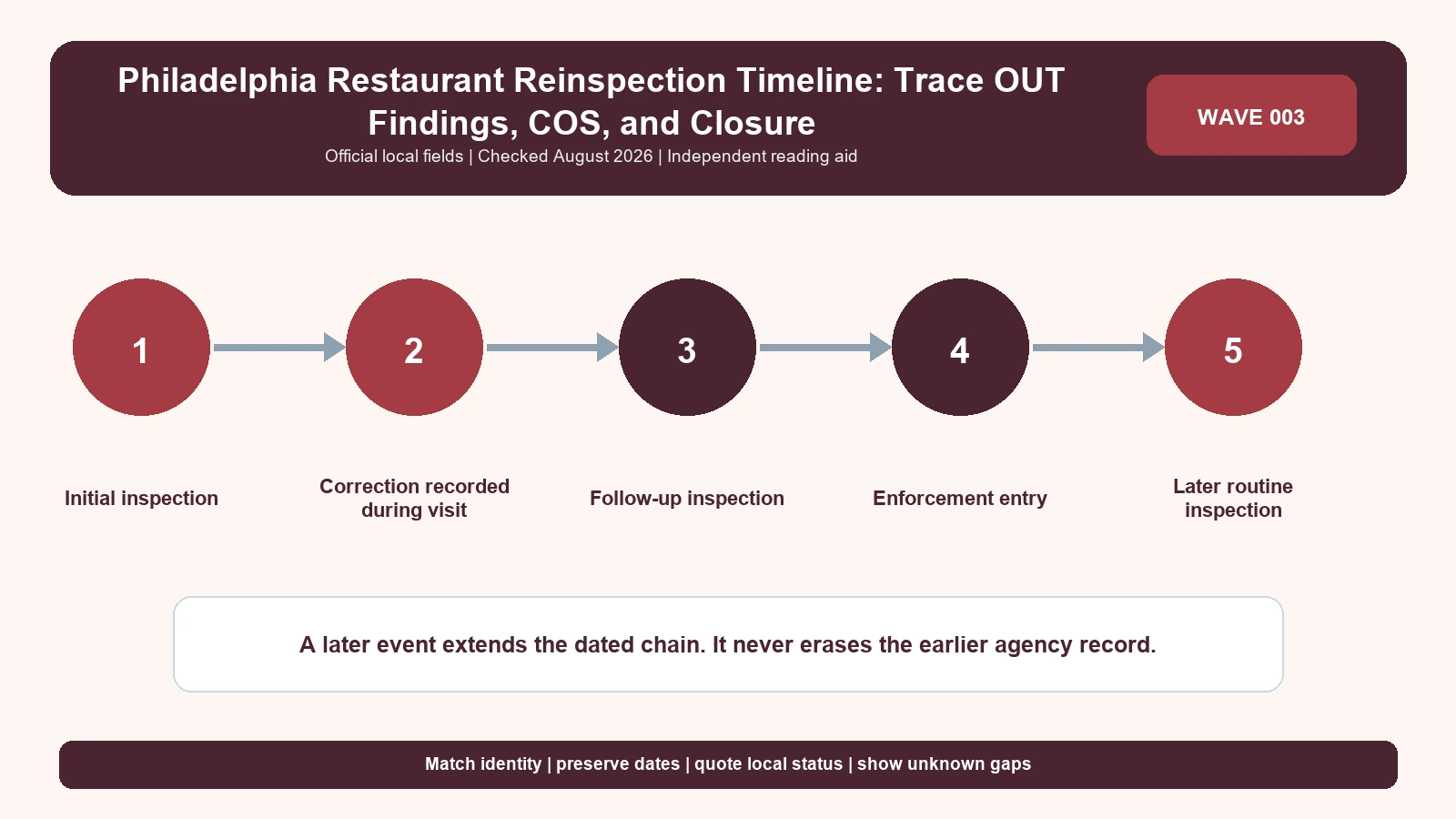
Trace Philadelphia OUT findings through onsite correction, repeat notation, reinspection, closure, and any separately documented reopening event.
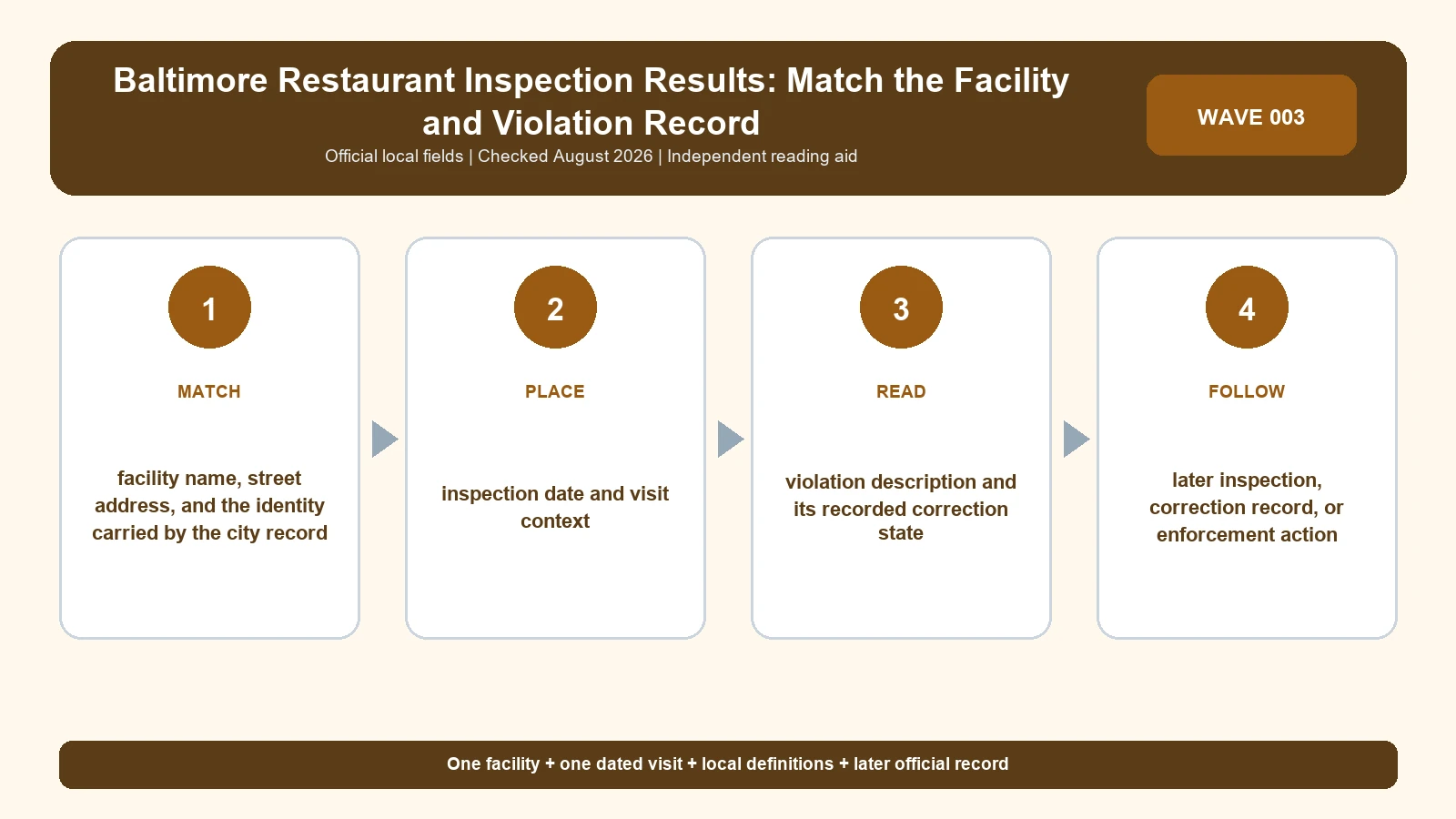
Match a Baltimore food facility and read its violation condition, corrective action, allowed time, and later city outcome as separate fields.
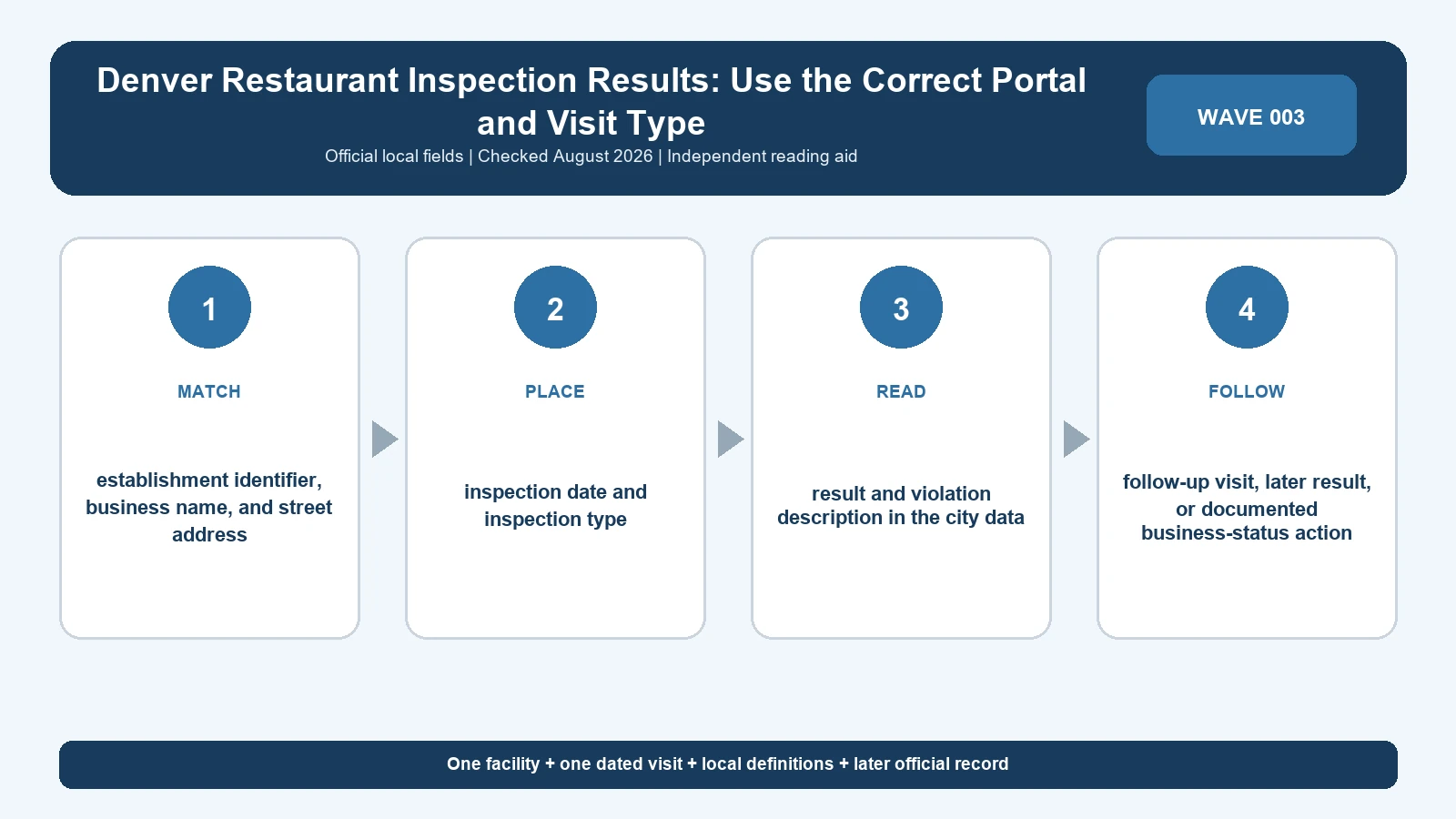
Use Denver’s visit date to choose the legacy or Accela portal, then interpret Full, Regular, Limited, and violation fields in local context.
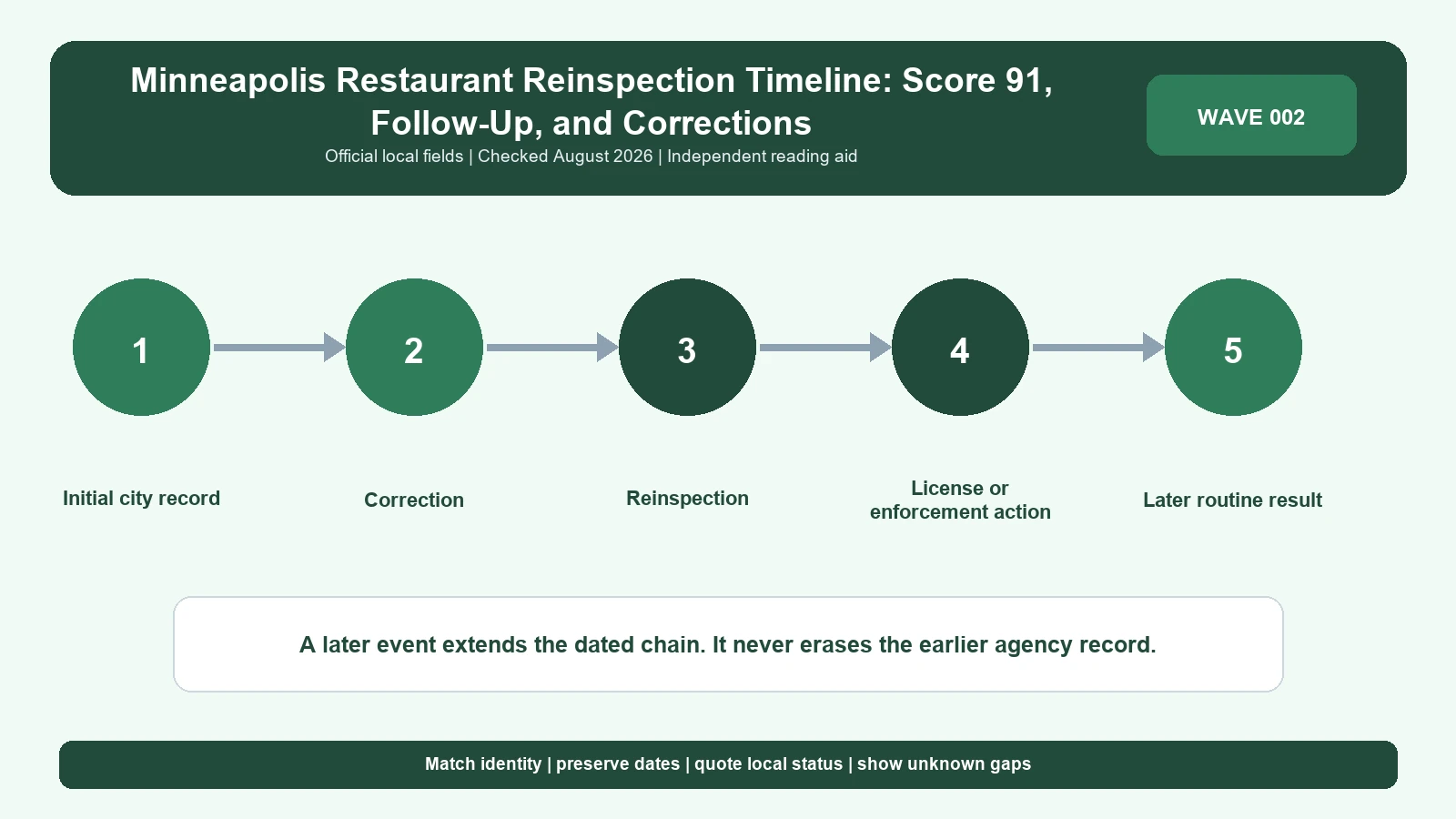
Use Minneapolis score 91 and inspector discretion to identify the follow-up lane, then record the actual return date and item outcomes.